
 메뉴 보기
메뉴 보기


미국과 한국, 일본 등 동맹국들을 겨냥한 북한의 지나친 도발적 위협은 세계의 관심을 ‘은자의 왕국’과 새 ‘경애하는 지도자’ 김정은에게 쏠리도록 만드는 목적을 달성했다. 이런 대대적 도발의 주요 목표는 젊은 지도자가 국제적인 위기에 대처할 능력을 지닌 강력한 군인이라는 이미지를 알리는 데 있는 듯하다.
예를 들어, 국제사찰단이 북한 핵계획을 ‘근접’ 감시하는 대가로 미국이 북한에 식량원조를 제공하기로 합의했다고 발표한 작년에 북한의 새 지도자는 유엔 안전보장이사회 결의를 위반하고 장거리 미사일을 발사하라는 오만한 명령을 내리는 조치로 대응했다.
현재 평양의 권력실세는 최고 지도자의 고모 김경희와 남편 장성택이다. 이 두 사람이 배후에서 새 지도자의 등장을 조종했다. 김정일은 아들의 권력을 구축하는 임무를 죽기 전에 김경희에게 맡겼다. 국방위 부위원장인 장성택이 베이징과 연결하는 평양의 핵심 인물이란 사실 역시 매우 중요하다.
북한의 계속되는 위협과 이란 기술자들이 참관한 2월12일 핵실험과 중거리미사일 배치에 대응하여 오바마 행정부는 몇 가지 적절한 대응조치를 했다. B-52기를 한국에 파견하고 B-2 스텔스 폭격기와 F-22 스텔스 전투기 부대를 아시아에 배치하는 한편 탄도미사일 요격능력을 가진 이지스 구축함 2척을 한국 근해로 이동시켰다. 오바마 행정부는 또한 괌과 알래스카의 미사일방어(MD) 체제를 강화하는 계획도 발표했다.
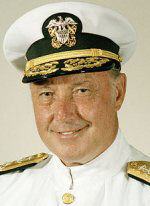 |
| 제임스 A 라이언스 前 미 태평양함대 사령관 |
또한 미국은 필요한 대륙간탄도미사일 실험을 연기함으로써 군사적 의지를 추가로 약화시켰다. 실험이 도발적으로 비친다는 것이 연기 사유였다. 북한은 연기 발표를 나약한 표시로 보았을 것이다.
존 케리 국무장관이 4월13일 베이징 방문에서 한 제안이 미국의 군사행동을 추가로 약화시켰다. 북한이 핵계획을 포기하기만 하면 미국의 MD체제의 강화 규모를 줄이겠다고 제안했다. 이런 무능한 정치 술수는 참으로 한심하다. 케리가 베이징에서 거둔 소득은 구태의연한 범위에서 벗어나지 못했다. 즉 양국은 한반도의 비핵화 원칙을 존중한다는 공동성명 발표에 그쳤다.
중국이 북한과 이란의 핵 및 미사일 계획을 직접 돕는 것은 국제사회를 불안정하게 만들 뿐만 아니라 미국에 비우호적이고 도발적인 행위라는 것을 이해시킬 필요가 있다.
김일성의 죽음으로 김정은의 아버지가 권력을 계승했을 때 베이징에 머물고 있던 필자는 중국군 고위지도자로부터 “북한에서 일어나는 일은 우리가 전부 알고 있다”는 말을 들었다. 이런 통제가 지금도 유효하다면 미국은 중국과 협상할 때 한반도를 비핵화하기 위한 긍정적인 조치를 취할 필요가 있다는 점을 분명하게 밝힐 필요가 있다.
중국이 건설적인 조치를 가시적으로 취할 때까지 미국은 6자회담에 참여할 필요가 없다. 미국은 북한의 불법적인 행동을 너무 오랫동안 방치했다. 북한의 행동에 대응하여 미국이 필요한 조치를 취한다면 서태평양에서 평화와 안정을 달성할 수 있는 훨씬 강력한 입지를 확보하는 한편 이란에 강력한 메시지를 보내게 될 것이다.
제임스 A 라이언스 前 미 태평양함대 사령관
워싱턴타임스·정리=오성환 외신전문위원
The right response to North Korea
By James A. Lyons
North Korea's outrageous and provocative threats to the United States and our allies Japan and South Korea have certainly had the intended effect of causing world attention to focus on the hermit kingdom and its new "dear leader," Kim Jong-un. It appears that the main purpose of these outbursts is to promote the young leader's image as a powerful military figure who can handle international crises. For example, last year when the United States announced an agreement to send food aid to North Korea in exchange for "close" international monitoring of its nuclear program, the new leader responded arrogantly by ordering the launch of a long-range missile in violation of U.N. Security Council resolutions. Obviously, food aid was canceled.
Besides China, the real power in Pyongyang today and the driving force behind the orchestrated rise of North Korea's new supreme leader is his aunt, Kim Kyong-hui. She, along with husband Jang Sung-taek, was chosen by her brother, Kim Jong-il, before he died, as the one to consolidate the son's authority. It should be noted that Jang Sung-taek is the vice chairman of the National Defense Commission and most importantly, is the regime's key link with Beijing.
In response to North Korea's continuing threats and following its third nuclear-weapon test on Feb. 12 (with Iranian technicians on-site), plus its deployment of medium-range missiles, the Obama administration took some appropriate counteractions by flying B-52 bombers over South Korea; deploying stealth B-2 bombers and F-22 stealth fighters as well as moving two U.S. NavyAegis ABM-capable destroyers off the coast of South Korea. The administration also announced plans to upgrade missile defense for Guam and Alaska.
These moves were certainly welcomed by our Western Pacific allies, but were quickly undercut by our announcement of how we would respond to an overt North Korean aggressive act. In effect, we stated that our response would be limited to a "proportional response in kind." This defies logic. Why would you announce in advance how you would respond to an aggressive act by your enemy? With essentially nothing to lose, North Korea cannot only control the engagement, but the outcome. When are we going to learn proportional responses in war don't work? They only invite aggression. You must keep your enemy off-balance. You must retain the initiative by creating a situation e.g., force-posturing that if he takes aggressive action, our response will be "unpredictable but devastating." The enemy must be made to realize that he has nothing to gain, and that's how you maintain deterrence.
We further weakened our military demonstration of resolve by postponing an intercontinental ballistic-missile test that we needed to conduct. The reason given was that it may be seen as being provocative. I would hope so, but I am sure North Korea viewed the announced postponement as a sign of weakness.
Secretary of State John F. Kerry's visit to Beijing on April 13 further undercut our military moves by offering to curtail the recent beefing up of our anti-ballistic-missile defenses if only North Korea would abandoned its nuclear program. This ineptness in statecraft bargaining is mind-boggling. What Mr. Kerry obtained in Beijing was nothing more than the old, tired statement that the two countries announced that they endorsed the principle of a nuclear-free Korean Peninsula. China must be made to understand that their direct assistance to North Korea's (and Iran's) nuclear and missile programs is not only destabilizing, but that we consider this assistance an unfriendly act and provocative.
I was meeting in Beijing with Gen. Liu Huaqing, China's top military officer, when Kim Jong-un's father took over after the death of his father, "Eternal Leader" Kim Il-sung, and was making erratic statements. The general told me, "Don't worry, nothing happens in North Korea that we are not aware of." Since this control still exists, I believe, we should in our negotiations with China make it clear that if Beijing actually wants a nuclear-free peninsula, they need to take some positive steps. A good indication of their sincerity would be for them to withdraw the 16-wheel trucks they transferred to North Korea so that they could launch their new missiles against the United States. That would be a significant signal.
Until China takes such a visibly constructive act, we should not participate in any future "Six-Party" talks. Other actions we should take include:
Immediately rescind the "proportional response in kind" strategy.
Announce that should North Korea launch a missile in violation of U.N. Security Councilsanctions, we will intercept it as a "target of opportunity."
Announce that we are restoring the tactical nuclear-armed Tomahawk cruise missiles to our inventory. It would be carried primarily by our nuclear submarines so that we have a secure tactical nuclear capability.
For too long, we have let an illegal action stand. We should demand that North Korea return the USS Pueblo, an unarmed surveillance ship, which was seized illegally in international waters in 1969. If it's not returned, we will retain the option to destroy it.
If we take the above actions, we will be, along with our allies, in a much stronger position to achieve our objectives of peace and stability in the Western Pacific. We will also have sent a strong message to Iran.
By James A. Lyons
North Korea's outrageous and provocative threats to the United States and our allies Japan and South Korea have certainly had the intended effect of causing world attention to focus on the hermit kingdom and its new "dear leader," Kim Jong-un. It appears that the main purpose of these outbursts is to promote the young leader's image as a powerful military figure who can handle international crises. For example, last year when the United States announced an agreement to send food aid to North Korea in exchange for "close" international monitoring of its nuclear program, the new leader responded arrogantly by ordering the launch of a long-range missile in violation of U.N. Security Council resolutions. Obviously, food aid was canceled.
Besides China, the real power in Pyongyang today and the driving force behind the orchestrated rise of North Korea's new supreme leader is his aunt, Kim Kyong-hui. She, along with husband Jang Sung-taek, was chosen by her brother, Kim Jong-il, before he died, as the one to consolidate the son's authority. It should be noted that Jang Sung-taek is the vice chairman of the National Defense Commission and most importantly, is the regime's key link with Beijing.
In response to North Korea's continuing threats and following its third nuclear-weapon test on Feb. 12 (with Iranian technicians on-site), plus its deployment of medium-range missiles, the Obama administration took some appropriate counteractions by flying B-52 bombers over South Korea; deploying stealth B-2 bombers and F-22 stealth fighters as well as moving two U.S. NavyAegis ABM-capable destroyers off the coast of South Korea. The administration also announced plans to upgrade missile defense for Guam and Alaska.
These moves were certainly welcomed by our Western Pacific allies, but were quickly undercut by our announcement of how we would respond to an overt North Korean aggressive act. In effect, we stated that our response would be limited to a "proportional response in kind." This defies logic. Why would you announce in advance how you would respond to an aggressive act by your enemy? With essentially nothing to lose, North Korea cannot only control the engagement, but the outcome. When are we going to learn proportional responses in war don't work? They only invite aggression. You must keep your enemy off-balance. You must retain the initiative by creating a situation e.g., force-posturing that if he takes aggressive action, our response will be "unpredictable but devastating." The enemy must be made to realize that he has nothing to gain, and that's how you maintain deterrence.
We further weakened our military demonstration of resolve by postponing an intercontinental ballistic-missile test that we needed to conduct. The reason given was that it may be seen as being provocative. I would hope so, but I am sure North Korea viewed the announced postponement as a sign of weakness.
Secretary of State John F. Kerry's visit to Beijing on April 13 further undercut our military moves by offering to curtail the recent beefing up of our anti-ballistic-missile defenses if only North Korea would abandoned its nuclear program. This ineptness in statecraft bargaining is mind-boggling. What Mr. Kerry obtained in Beijing was nothing more than the old, tired statement that the two countries announced that they endorsed the principle of a nuclear-free Korean Peninsula. China must be made to understand that their direct assistance to North Korea's (and Iran's) nuclear and missile programs is not only destabilizing, but that we consider this assistance an unfriendly act and provocative.
I was meeting in Beijing with Gen. Liu Huaqing, China's top military officer, when Kim Jong-un's father took over after the death of his father, "Eternal Leader" Kim Il-sung, and was making erratic statements. The general told me, "Don't worry, nothing happens in North Korea that we are not aware of." Since this control still exists, I believe, we should in our negotiations with China make it clear that if Beijing actually wants a nuclear-free peninsula, they need to take some positive steps. A good indication of their sincerity would be for them to withdraw the 16-wheel trucks they transferred to North Korea so that they could launch their new missiles against the United States. That would be a significant signal.
Until China takes such a visibly constructive act, we should not participate in any future "Six-Party" talks. Other actions we should take include:
Immediately rescind the "proportional response in kind" strategy.
Announce that should North Korea launch a missile in violation of U.N. Security Councilsanctions, we will intercept it as a "target of opportunity."
Announce that we are restoring the tactical nuclear-armed Tomahawk cruise missiles to our inventory. It would be carried primarily by our nuclear submarines so that we have a secure tactical nuclear capability.
For too long, we have let an illegal action stand. We should demand that North Korea return the USS Pueblo, an unarmed surveillance ship, which was seized illegally in international waters in 1969. If it's not returned, we will retain the option to destroy it.
If we take the above actions, we will be, along with our allies, in a much stronger position to achieve our objectives of peace and stability in the Western Pacific. We will also have sent a strong message to Iran.

