
 메뉴 보기
메뉴 보기


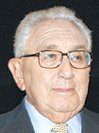 |
| 헨리 A 키신저 前 美 국무장관 |
드미트리 메드베데프 러시아 대통령의 취임을, 블라디미르 푸틴 전 대통령 정권의 연장으로 보는 것이 서방 세계의 통념이다. 즉 서방은 메드베데프가 푸틴의 정치제제와 강압적인 외교정책을 계승한 것으로 생각한다.
필자는 얼마 전 러시아를 방문하여 정계는 물론 재계와 지식층의 고위 인사들과 만나보고 나서 그러한 통념이 지나치게 단순하고 미숙한 판단에 기초를 두고 있다는 확신이 들었다.
현재 모스크바에 새로운 모습으로 등장하고 있는 권력구조는 이러한 통념보다 훨씬 복잡해 보인다. 만약 푸틴의 주된 목적이 권력유지였다면, 국민의 지지가 최고조에 달해 집권연장을 위한 헌법 개정이 가능한 상황에서 복잡하고 불확실한 총리의 길을 택한 까닭이 무엇인가 하는 의문이 남는다.
필자는 러시아 정치가 새로운 단계에 접어들고 있다는 생각을 금할 수 없다. 푸틴이 총리 집무실을 크렘린에서 러시아 정부청사로 옮긴 것은 상징적이다. 메드베데프는 국가안보회의를 실질적으로 장악하고 헌법에 명시된 대통령의 직무를 수행하겠다고 공언했다. 즉 러시아의 외교정책을 결정하고 집행하겠다는 것이다.
대통령이 외교 및 안보 정책을 결정하고 총리가 부분적으로 보필한다는 말은 메드베데프나 푸틴뿐만 아니라 러시아 고위관리들도 입버릇처럼 하고 있다. 러시아에서 모종의 권력 재분배가 진행되고 있다는 사실을 부인하는 사람은 없으나 이 정치과정이 어떤 결과를 초래할 것인지 자신 있게 말할 수 있는 사람은 없다.
푸틴은 여전히 강력한 권력과 영향력을 유지하고 있다. 푸틴이 1990년대 러시아의 혼란과 굴욕적인 국가 위기를 극복한 지도자라고 러시아 국민 대다수가 생각한다. 당시 러시아는 국가와 경제 및 이념과 제국이 붕괴되었다. 러시아 경제는 외국의 도움을 받아 회복되었다. 당시 러시아의 외교는 수동적이었다.
푸틴은 후임자인 메드베데프의 대통령 직무수행 능력을 당분간 지켜보기로 입장을 정한 듯이 보인다. 그는 차기 대통령 선거의 후보가 될 수 있는 가능성을 계속 열어두고 있을 가능성이 있다.
최종 결과가 어떻게 나오든 러시아의 대통령 선거는, 국가의 기반을 다지는 단계에서 현대화를 실현하는 시기로 이행하는 전환점이 되고 있다. 푸틴의 경우처럼 지배자가 강요받지 않은 상황에서 자발적으로 권력을 이양한 것은 러시아 역사에 전례가 없는 일이다.
러시아 경제가 더욱 복잡해짐에 따라 예측 가능한 법적절차의 필요성이 생기고 있다. 메드베데프가 이러한 필요성의 대두를 예고했다. 현재 2개의 권력 중심을 가진 러시아 정부의 운영 방식은 과거에 없었던 견제와 균형을 향한 진화의 시작으로 보인다.
러시아식 민주주의 형태로 진화하는 과정은 물론 예정된 것이 아니다. 또 진화의 동기가 반드시 민주주의 체제의 성격을 이론적으로 반영한 것도 아니다. 서방의 민주주의 진화 또한 민주주의에 입각하여 진행된 것은 아니다. 13세기 영국의 마그나 카르타 즉 대헌장은 일반 대중이 아닌 귀족계급의 권리를 보장하기 위해 만들어진 것이다.
현재 진행되고 있는 러시아 정치의 진화가 미국 외교정책에서 의미하는 바는 무엇일까. 앞으로 수개월 동안 러시아는 국가안보정책의 수립과 실행 사이에 존재하는 차이를 이해하기 위해 노력할 것이다. 부시 행정부와 대통령 선거 후보들은 러시아가 이러한 정책 조정을 할 수 있는 시간을 갖도록 허용해야 한다. 즉 러시아의 정책에 대해 사사건건 공개적인 논평을 삼가는 것이 현명하다.
러시아에는 자국의 민주적 진화를 미국이 촉진해 주도록 기대하는 사람들도 있다. 그러나 압도적 다수의 러시아인들은 미국이 러시아의 국력회복을 주제넘게 방해하기로 작정했다고 생각한다는 것이 거의 모든 관측통들의 일치된 견해다. 러시아의 그런 환경은 민주적인 진화보다는 민족주의적이고 미국과의 대결을 지지하는 반응을 유발할 가능성이 크다.
헨리 A 키신저 前 美 국무장관
트리뷴 미디어 서비스
정리=오성환 외신전문위원
THE UNCONVENTIONAL WISDOM ABOUT RUSSIA
By Henry A. Kissinger
Conventional wisdom treated Dmitry Medvedev's inauguration as president of the Russian Federation as a continuation of President Vladimir Putin's two terms of Kremlin dominance and assertive foreign policy.
A visit to Moscow with an opportunity to meet leading personalities of the political world, as well as representatives of various age groups in business and intellectual circles, convinced me that this judgment is oversimplified and premature.
For one thing, the emerging power structure in Moscow seems more complex than conventional wisdom holds. It was always doubtful why, if his primary objective was to retain power, Putin, at the height of a popularity that would have allowed him to amend the constitution to extend his term, would choose the complicated and uncertain route of becoming prime minister.
My impression is that a new phase of Russian politics is under way. The move of Putin's office from the Kremlin to the building housing the Russian government is symbolic. Medvedev has stated that he means to chair the National Security Council and to carry out the Russian constitution's provision that assigns the design and public face of Russian foreign policy to the president. The statement that the president designs foreign and security policy, and the prime minister implements parts of it, has become the mantra of Russian officials from Medvedev and Putin down. I encountered no Russian in or out of government who doubted that some kind of redistribution of power is taking place, although they were uncertain of its outcome.
Putin remains powerful and highly influential. He is seen by most Russians as the leader who overcame the humiliation and chaos of the 1990s when the Russian state, economy, ideology and empire collapsed; Russia's economic recovery depended on foreign assistance; and Russia's foreign policy was passive. It is likely that Putin has assigned to himself a watching brief over the performance of his successor; it is possible that he is keeping open the option of becoming a candidate in a future presidential election.
Whatever the ultimate outcome, the Russian election marks a transition from a phase of consolidation to a period of modernization. The voluntary ceding of power by a ruler who was under no compulsion to do so is an unprecedented event in Russian history. The growing complexity of the Russian economy has generated the need for predictable legal procedures, as already foreshadowed by Medvedev. The operation of the Russian government -- at least initially -- with two centers of power may, in retrospect, appear as the beginning of an evolution toward a form of checks and balances lacking heretofore.
The evolution into a Russian form of democracy is not foreordained, of course, and the motivations for it have not necessarily been produced by theoretical reflections on the nature of democracy. But neither was the democratic evolution in the West. After all, the Magna Carta was a document designed to guarantee the rights of the aristocracy, not of the people at large.
What are the implications for American foreign policy? During the next several months, Russia will be concerned with working out the practical means of the distinction between design and implementation of national security policy. The Bush administration and the presidential campaigns would be wise to give Russia some space to work out these arrangements by restraining public comment.
With respect to the long term, ever since the demise of the Soviet Union in 1991, a succession of American administrations has acted as if the creation of Russian democracy were a principal American task. Speeches denouncing Russian shortcomings and gestures drawn from the Cold War struggle for pre-eminence have occurred frequently.
Proponents of such policies assert that the transformation of Russian society is the precondition of a more harmonious international order. They argue that if the current Russia is kept under pressure, it will eventually implode just as the Soviet Union did. The policy of assertive intrusion into what Russians consider their own sense of self runs the risk of thwarting both geopolitical as well as moral goals.
There are undoubtedly groups and individuals in Russia who look to America for accelerating a democratic evolution. But almost all observers agree that the vast majority of Russians consider America as presumptuous and determined to stunt Russia's recovery. Such an environment is more likely to encourage a nationalist and confrontational response than a democratic evolution.
It would be a pity if this mood persisted because, in many ways, we are witnessing one of the most promising periods in Russian history. Exposure to modern open societies and engagement with them is more prolonged and intense than in any previous period of Russian history -- even in the face of unfortunate repressive measures. The longer this continues, the more impact it will have on Russia's political evolution.
The values of our society dictate an American commitment to a democratic evolution. But the pace of it will inevitably be Russian. We can affect it more by patience and historical understanding than by offended disengagement and public exhortations.
This is all the more important because geopolitical realities provide an unusual opportunity for strategic cooperation between the erstwhile Cold War adversaries. Between them, the U.S. and Russia control 90 percent of the world's nuclear weapons. Russia contains the largest landmass of any country, abutting Europe, Asia and the Middle East. Progress toward stability, with respect to nuclear weapons, in the Middle East and in Iran, requires -- or is greatly facilitated by -- Russian-American cooperation.
The imperialist foreign policy of czarist and Soviet Russia was facilitated by the weakness of nearly all countries at Russia's borders. This enabled Russia, in the course of a century and a half, to advance inexorably, almost like a natural force, from the Volga to the Elbe, along the shores of the Black Sea, into the Caucasus and the approaches to India. In Asia, it penetrated to the Pacific and into Manchuria and Korea. Russian momentum was aided by the autocratic nature of Kremlin rule, which enabled the czar and the Soviet rulers to conduct policy without significant restraint. Security became synonymous with continued expansion, and domestic legitimacy was achieved largely by demonstrated power abroad.
Those conditions have fundamentally altered. Russia's neighbors have overcome the weakness that tempted Russian adventures. The 2,500-mile frontier with China is a demographic challenge; east of Lake Baikal, 6.8 million Russians face 120 million Chinese in the provinces along the common border. Across an equally long frontier, Russia has to deal with militant Islamism extending its reach into southern Russia. In the west lies Russia's western frontier, where Russia finds itself with the need to adjust to the loss of a history of empire, across frontiers behind which lie territories identified with Russian history for hundreds of years. But the Russian strategic reach has been limited by emerging realities, including the NATO membership of erstwhile Warsaw Pact states.
Though Russia's population is experiencing a surge in national pride, its leaders understand the risk of altering the new international order by Russia's traditional methods. They know Russia's Muslim population of 25 million contains a significant number of doubtful loyalty to the state. The health system is in need of overhaul; the infrastructure has to be rebuilt. Russia is obliged to concentrate on its domestic reform for the first time in history.
Confrontational rhetoric notwithstanding and a bullying style that developed during the period of imperialism, Russia's leaders are conscious of their strategic limitations. Indeed, I would characterize Russian policy under Putin as driven in a quest for a reliable strategic partner, with America being the preferred choice. Russian turbulent rhetoric in recent years reflects, in part, frustration by our seeming imperviousness to that quest. The two presidents have formed a constructive relationship but have not been able to overcome institutional habits formed during the Cold War. On the Russian side, two elections for the Duma and the president have given Russian leaders an incentive to appeal to nationalist feelings rampant after a decade of perceived humiliation.
These detours do not affect the underlying reality. Three issues dominate the political agenda: security; Iran; and the relation of Russia to its former dependents, especially Ukraine.
Because of their nuclear preponderance, Russia and America have a special obligation to take the lead in global nuclear issues such as nuclear proliferation. There have been constructive initiatives, such as greater transparency and the linking of anti-ballistic missile defense systems of the two countries, noted in the communiqu? issued by Presidents Bush and Putin in Sochi in April of this year. But the general statements have yet to be followed by a detailed exploration.
Four questions need to be answered with respect to nuclear proliferation: Do Russia and the U.S. agree on the nature of the challenge posed by the acquisition of nuclear weapons by Iran? Do they agree on the status of the Iranian nuclear program? Do they agree on the diplomacy to avert the danger? Do they agree on what measures to take if whatever diplomacy is finally adopted fails?
It is my impression that a considerable consensus is emerging between the U.S. and Russia regarding the first two questions. With respect to the others, both sides must keep in mind that neither is able to overcome the challenge alone or at least only with greatly increased difficulty.
The issue of relations with Ukraine goes to the heart of both sides' perceptions of the nature of international affairs. America, applying the lessons of the Cold War and its traditional universal maxims, sees the issue in terms of overcoming a potential military threat. For Russia, the issue is, above all, one of coming to terms with a painful historic upheaval.
Genuine independence for Ukraine is essential for a peaceful international system and must be unambiguously supported by the U.S. Creating close political ties between the European Union and Ukraine, including membership in the European Union, is important. But the movement of the Western security system from the Elbe River to the approaches to Moscow brings home Russia's decline in a way bound to generate a Russian emotion that will inhibit the solution of all other issues. It should be kept on the table without forcing the issue to determine the possibilities of making progress on other issues.
The Sochi declaration of Presidents Bush and Putin in April outlined a road map for an emerging strategic dialogue between the two sides. It remains for the new administrations in Russia and America to give it operational context.
foreshadow:징조를 보이다 foreordained:운명이 예정된 presumptuous:주제넘은

